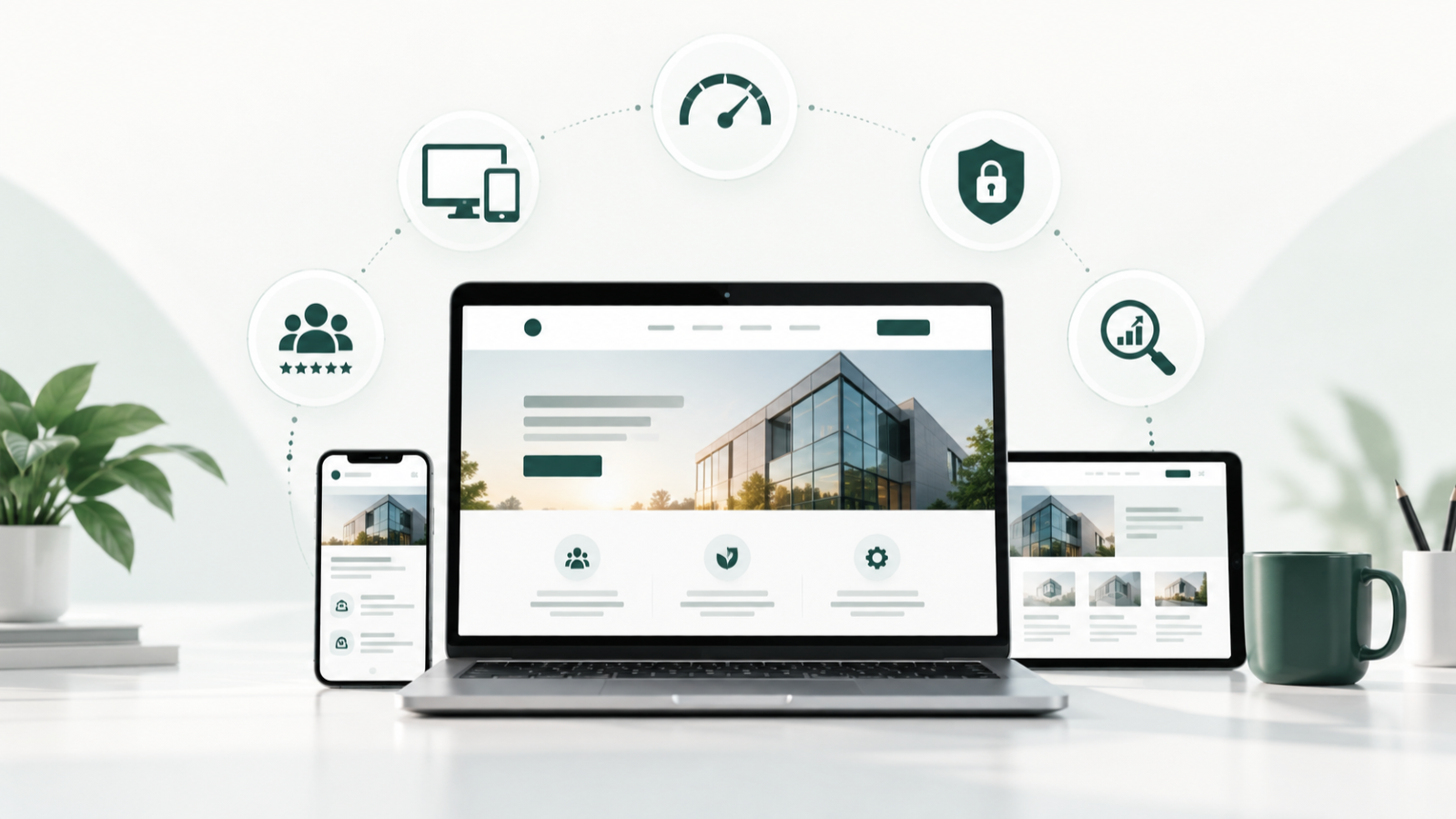
A company website is often the first place potential customers go to learn about a business. In 2026, simply having a website is no longer enough. A professional website should clearly represent your company, build trust, perform well on every device, and make it easy for visitors to take action.
1. A Clean and Professional Design
Your website should immediately communicate that your company is professional and trustworthy.
A modern design should use clear typography, balanced spacing, consistent colors, high-quality visuals, and a simple structure. Visitors should be able to understand who you are and what you offer within the first few seconds.
Avoid overcrowded pages, unnecessary animations, and too many design elements. A clean interface usually creates a stronger and more professional impression.
2. Mobile-Friendly and Responsive Design
A professional website must work correctly on mobile phones, tablets, laptops, and desktop computers.
Responsive design automatically adjusts the layout based on the visitor's screen size. Buttons should remain easy to tap, text should remain readable, and important information should never be hidden or difficult to access.
A poor mobile experience can cause visitors to leave your website before they even explore your services.
3. Fast Loading Performance
Website speed directly affects user experience.
Images should be properly optimized, unnecessary scripts should be removed, and the website should be developed efficiently so that pages load quickly.
Visitors expect information immediately. A slow website can reduce engagement, create a poor first impression, and cause potential customers to choose a competitor instead.
4. Clear Information About the Company
Visitors should quickly understand:
Who your company is
What services or products you provide
Who you serve
Why customers should choose you
How they can contact you
Important pages such as About Us, Services, Projects or Portfolio, Contact, and Blog should be organized clearly.
Your website should answer the most important questions a potential customer may have before contacting your company.
5. Strong Calls to Action
A professional website should guide visitors toward the next step.
Depending on your business, this may include:
Request a quotation
Contact the company
Book a consultation
Call or send a message
View available services
Submit an inquiry
Calls to action should be clear and placed naturally throughout the website.
The goal is not only to provide information, but also to turn visitors into potential customers.
6. Security and Trust
Security is an essential part of every professional website.
The website should use HTTPS, secure forms, updated software, proper access control, regular backups, and protection against common security threats.
Customers are more likely to trust a website that looks secure, professional, and properly maintained.
You can also strengthen trust by displaying genuine company information, completed projects, customer feedback, certifications, licenses, or business achievements where appropriate.
7. Search Engine Optimization
A well-designed website should also be easy for search engines to understand.
Good SEO starts with:
Clear page titles and descriptions
Proper heading structure
Useful and original content
Optimized images
Fast performance
Mobile-friendly pages
Clean URLs
Logical internal links
A strong website structure improves the chances that potential customers can discover your company through search engines.
8. Simple and Clear Navigation
Visitors should never struggle to find information.
The main navigation should contain only the most important pages and should remain consistent throughout the website.
A professional company website normally organizes information into sections such as Home, About, Services, Projects, Blog, Careers, and Contact.
The exact structure should depend on the business, but simplicity should always be a priority.
9. High-Quality Content
Professional design cannot replace poor content.
Website content should be clear, accurate, and focused on the customer. Instead of only describing the company, explain how your products or services solve real problems.
Use simple language, clear headings, short paragraphs, and useful information.
Regularly publishing valuable blog articles can also help demonstrate expertise and strengthen your online presence.
10. Contact and Lead Generation Features
Visitors should always have an easy way to contact your company.
Depending on your business, the website may include:
Contact forms
Phone numbers
Email addresses
WhatsApp or messaging options
Business location
Social media links
Quotation request forms
Contact options should be visible without making the website feel crowded.
11. Easy Content Management
A professional website should also be easy for the company to maintain.
Authorized staff should be able to update important content such as services, projects, blog posts, vacancies, announcements, images, and contact information without rebuilding the website.
This keeps the website accurate and useful over time.
12. Analytics and Performance Tracking
A company should understand how its website is performing.
Analytics can help show:
How many people visit the website
Which pages receive the most attention
Where visitors come from
Which services attract interest
Which pages generate inquiries
How visitors use the website
This information helps businesses improve their website based on real visitor behavior.
A Website Should Support Business Growth
In 2026, a professional company website is more than an online company profile. It is an important business tool for building trust, presenting services, attracting customers, generating inquiries, and strengthening a company's digital presence.
At Barlas Information Technology Services, we design and develop professional company websites based on the real needs of each business. We focus on modern UI/UX, responsive design, strong performance, security, easy content management, and a structure that helps businesses present themselves professionally and grow online.